A practical guide to gifting your own team, from onboarding kits to service milestones and remote-team gifts, built for North American HR teams and people managers planning a recognition budget.
Employee gifting runs on a different logic than client gifting. A client gift has to make an impression once, at the right moment. An employee gift program repeats: it shows up at onboarding, at a work anniversary, at the holidays, and sometimes for no occasion at all beyond saying the work was noticed. That repetition is exactly why generic items fall flat here faster than anywhere else. The same branded pen that felt fine as a one-off trade show giveaway can start to feel underwhelming over time when it is also what the company hands out for a five-year anniversary.
This guide covers the employee side of corporate gifting specifically: onboarding, recognition milestones, remote and hybrid teams, and seasonal staff gifts, along with a rough sense of what to budget at each level. For gifting aimed at clients rather than staff, see the broader corporate gifts overview, which covers both.
A welcome kit is the first physical object a new hire connects to the company, which makes it worth more attention than it usually gets. The most effective kits prioritize function over novelty: a good backpack for the commute, a notebook and pen that actually get used in the first meetings, and a piece of apparel that fits, rather than a random draw from inventory.
Remote and hybrid new hires are worth planning for separately. A kit that assumes someone is walking into an office on day one, with a mug and a lanyard, does not land the same way for someone opening a box at their kitchen table. For distributed teams, we typically recommend leaning harder into items with daily utility, like a quality water bottle, tech accessories or a branded hoodie, over items tied to an office setting.
Service milestone gifts work best when they scale with the milestone rather than repeating the same item every year. A one-year anniversary gift and a ten-year anniversary gift should not come from the same price tier: the ten-year gift carries more significance, both for the recipient and as a signal to the rest of the team about how long-tenure staff are treated.
A common structure we see work well is a tiered program: a modest item at one and three years, a mid-tier gift with some personalization at five years, and a higher-value item, often engraved or paired with an award, at ten years and beyond. Pairing a milestone gift with a physical award or engraved piece can feel more meaningful than a gift alone, since the award is the part that stays on a desk or shelf permanently.
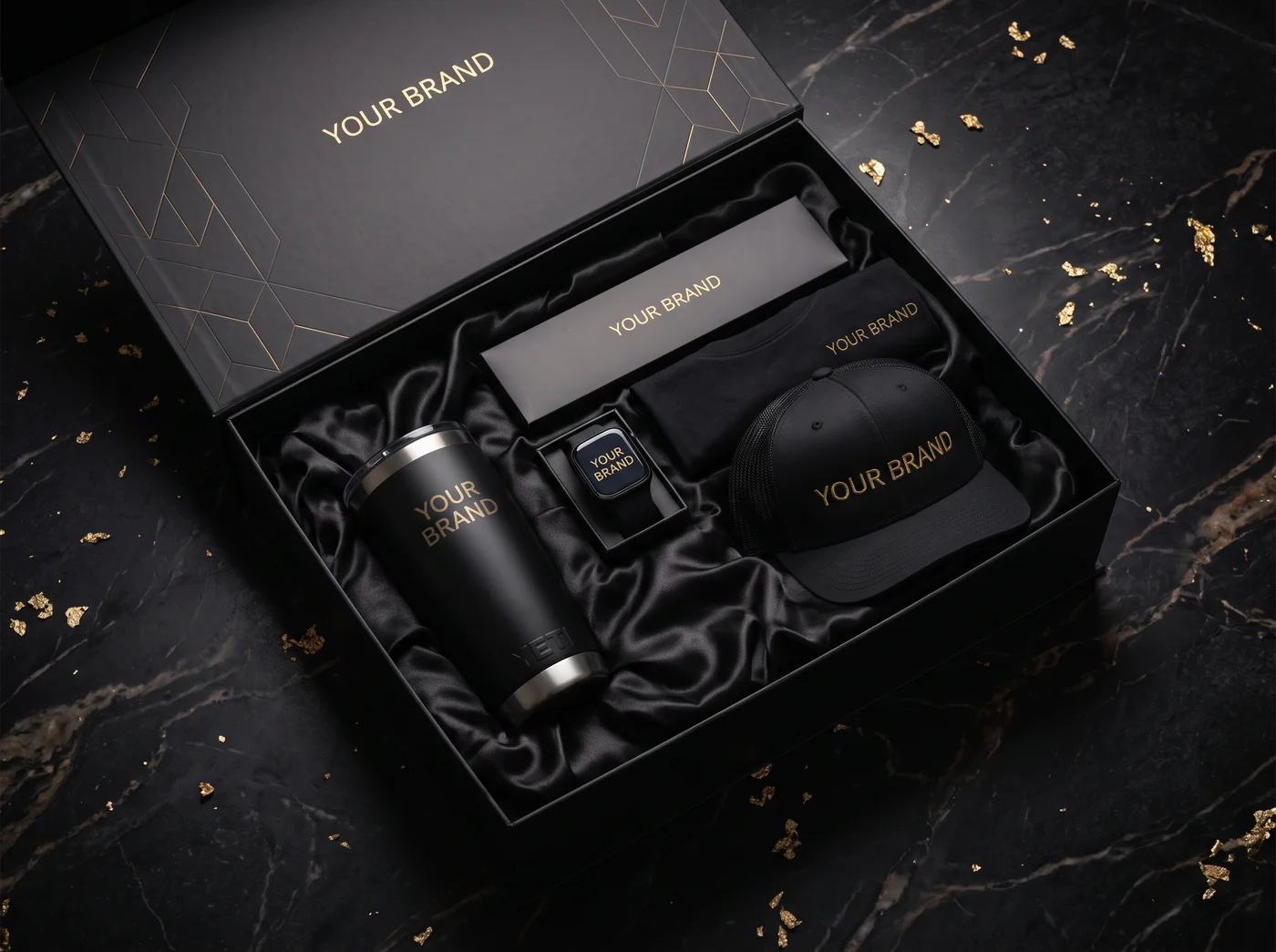
Not every employee gift needs to be tied to a fixed date. Spot recognition, peer-nominated awards and small thank-you gifts after a heavy project or a difficult quarter tend to land better precisely because they are unscheduled. These programs work best with a small catalogue of pre-approved items in a modest budget range, so a manager can trigger a gift quickly without a new sourcing conversation each time.
Keeping a standing order or a small on-hand inventory for this category through promotional fulfillment removes the lead-time problem: the gift can go out the same week it is earned instead of waiting on a production run. For a larger staff list, this is usually where an online company store takes over from a manual request list.
These two categories get lumped together but solve different problems, and mixing them up is one of the more common ways an employee gifting budget underperforms. Branded swag, a logo hoodie, a company tumbler, a laptop sleeve, is meant to be handed out at scale: onboarding, all-staff events, or as a standing option in a swag closet. Consistency matters more than individuality, since the same item is going to dozens or hundreds of people.
Personalized recognition gifts work the opposite way. A milestone gift, a spot award or a retirement gift is meant to feel chosen for one person, which usually means a name engraved on the item, a note referencing the specific achievement, or a product picked to suit that individual rather than pulled from a standard catalogue. Running both categories through the same budget line, with the same per-unit cost, tends to leave the swag overspent and the recognition gifts underwhelming. Splitting the two into separate budgets, even informally, keeps each one doing its job.
A useful rule of thumb: if the same item is going to more than a handful of people at once, it is swag, and the goal is consistent quality at a reasonable unit cost. If it is going to one person to mark something specific, it is recognition, and the goal is that the recipient can tell it was chosen for them.
Holiday gifting for employees is usually the single largest gifting order of the year by headcount, which makes it the place where a per-recipient budget matters most. Overspending across a large staff list adds up fast, while underspending on a program that repeats every December signals more than a one-off miss would.
For larger staff lists, shipping to individual addresses for remote or multi-location teams needs to be planned well ahead of the holiday production crunch. Six to eight weeks of lead time is a reasonable starting point for a company-wide holiday order, especially with custom packaging or a long list of individual shipping addresses. For the client and partner side of a holiday program, which usually runs on the same clock but with a different list, see our corporate holiday gifting timeline.
The biggest practical difference with a distributed workforce is shipping, not product choice. Every gift needs to work as something that arrives by mail rather than gets handed across a desk. Fragile items like glass awards or mugs aren't off the table, they just need packaging built for shipping; what doesn't translate is anything that depends on being presented in person to land well.
For companies with staff spread across multiple provinces or states, working with a supplier that can pack and ship to a distribution list, rather than a single bulk shipment to one office, is what makes a recurring program manageable. This is usually the deciding factor between a program that runs smoothly every quarter and one that turns into a scramble each time.
Employee gift budgets vary more by program type than by company size. A useful way to think about it is by occasion rather than trying to set one number for all employee gifts:
Usually the most standardized spend, since every new hire gets the same kit. Budget for consistent quality across the full kit rather than one hero item and filler pieces.
Budget in tiers that scale with tenure, not a flat amount. The gap between the one-year and ten-year tier should be noticeable.
Keep this tier modest but ready to trigger quickly. A small standing catalogue works better than a high-value item that needs approval each time.
Set a per-recipient number before choosing products, then confirm it still works once shipping to individual addresses is factored in.
The right mix depends on your team size, how distributed your staff is, and which occasions you want to cover. Get in touch with our team and we'll build a curated selection with pricing and timelines from Proforma's supplier network.